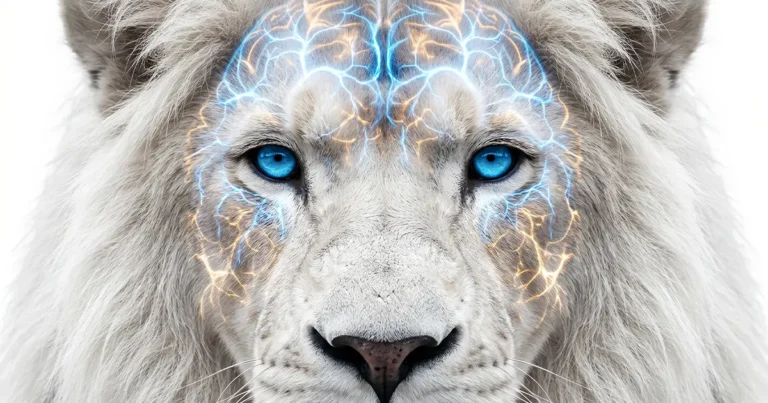
Somewhere underneath the day-to-day, there's a quiet thought you keep not finishing.
It shows up when you're alone in the car. When you can't sleep at 3 a.m. When someone asks an innocent question, and you feel your shoulders go up. You know what the thought is. You've been refusing to think about it for months.
Then the consultants come in. Or the advisor. Or your sharpest operator pulls you aside. Every single one of them is missing it. They don't understand the customer. They weren't there in the early days. They're not seeing what you see. You feel the rage climb up your neck. Or the shame. Or just a boiling annoyance you can't quite name.
That feeling isn't proof you're right. It's proof that your nervous system just hijacked the meeting.
Why founders make bad decisions is rarely a strategy problem. It's an operating system problem. The thinking you experience, the deliberate, conscious analysis, is a thin layer of Software running on top of a much older, much faster OS that was built for an environment that no longer exists. When the OS decides the situation is threatening, the Software you identify with goes quiet. You don't notice. You feel certainty instead.
This piece is about that OS. The five mechanisms it runs. Why those mechanisms turn your greatest asset as a founder into the thing quietly burning the business down. And what actually starts to shift once you can see it.
The Founder Pattern Nobody Tells You About
Here's the uncomfortable truth most founders never get to: the problem isn't ego in the cartoon sense. You're not a narcissist. You're not stupid. You're not even particularly arrogant. Most operators I work with are deeply self-aware in conversation. Self-awareness isn't the bottleneck.
The bottleneck is structural. Identity-fusion with the business, the same fire that got you started, quietly rewires how your brain processes incoming information. Disagreement with the idea starts to feel like a personal attack. Contrary data starts to feel like betrayal. And when your nervous system reads input as a threat, your brain stops being an analyst and starts being a bodyguard.
This isn't a discipline problem. It's not a mindset problem. It's a hardware-and-OS problem dressed up as a thinking problem.
This is the layer where The Mind Model lives. A three-layer working map of how the human mind operates: the Software you're aware of, the OS running underneath it, and the Hardware the OS runs on. Most founders pour years of effort into upgrading their Software, adopting better frameworks, reading more, and sharpening their analysis, without ever noticing that the OS is the one driving the car. They keep adding features to an application, but the underlying system keeps overriding them.
There are five specific OS-level mechanisms running underneath your best judgment as a founder. Once you see them named, you can't unsee them. They're not flaws to fix. They're features of the system you came pre-installed with, features that helped your ancestors survive on the savanna, and that have no idea you're trying to scale a company.
The Five Mechanisms Running Underneath Your Best Decisions
1. Motivated Reasoning: Your Brain Is a Lawyer, Not a Scientist
You think you're analyzing the data. You're not. You're prosecuting a case.
Motivated reasoning is the well-documented phenomenon where the brain works backward from the conclusion it wants and assembles supporting evidence after the fact.¹ When researchers scanned the brains of politically committed people processing information that threatened their beliefs, the regions associated with cold reasoning went quiet, and the regions associated with emotional regulation lit up.² This isn't a metaphor. You are not "considering" the contrary data. You are managing the discomfort of the contrary data, and your brain is happy to call the management process "thinking."
For founders, this is catastrophic. The numbers come back, and they don't say what you wanted them to say. So you find the asterisk. The methodology issue. The reason this particular data set isn't representative. The story beneath the numbers explains why the story above the numbers is wrong.
You weren't analyzing. You were lawyering.
This is OS work pretending to be Software work. The conscious mind narrates the activity as analysis. The OS is doing something completely different underneath.
2. Amygdala Hijack: When Threat Detection Eats Your Judgment
This is the one you can feel in your body. Which is a clue.
The amygdala is the brain's threat-detection system. Older than language, older than logic, evolved for spotting predators and rivals.³ When it perceives a threat, it floods the body with cortisol and adrenaline and effectively takes the prefrontal cortex (the part of the brain that handles deliberation, planning, and self-control) offline. In neuroscience, this is called an amygdala hijack, a term popularized by Daniel Goleman to describe the moment when the limbic system overrides rational thought.⁴
The brutal part: your amygdala doesn't know the difference between a lion and a McKinsey deck. A market analysis that contradicts your strategy gets processed the same way as a physical threat. Heart rate up. Jaw tight. Defensiveness online. The Hardware layer of the system reacts. The Software layer narrates it as "this consultant doesn't get it."
When the advisors come in and "none of them get it," when you feel that rage, that shame, that boiling annoyance, that's not your judgment talking. That's your judgment going offline. The version of you making decisions in that moment is not the version of you who built the business. It's a much older, much faster, much dumber version. And it's the one signing the check.
The body is the most honest signal you have here. The Software will lie to you. The Hardware never does.
3. Identity Fusion: When You Stop Being a Person Who Runs a Business
Most founders don't run businesses. They are their businesses.
Identity fusion is the psychological state where the boundary between the self and a group, cause, or project collapses.⁵ The business stops being something you do and becomes something you are. This produces extraordinary commitment, exactly the kind of all-in obsession that founding a company requires. It's not a bug. It's the feature that gets the business off the ground in the first place. Identity fusion is the engine.
Until it isn't.
Once you're fused with the business, every piece of feedback about the business is feedback about you. A pivot suggestion isn't a strategic input; it's a referendum on your worth. A bad quarter isn't a data point; it's a verdict on your identity. The same fusion that gave you the willpower to build the thing now makes you incapable of evaluating it.
This is where the OS layer and the Software layer get tangled. At the OS level, the business has become part of how you maintain a coherent sense of self. At the Software level, you experience this as "deeply believing in the vision." Both descriptions are true. Only one of them is accurate about what's actually running. This is why founders are often the last person in the company who can see what everyone else sees. Not because they're stupid. Because they can't afford to.
4. The Dopamine Confirmation Loop: Being Right Feels Better Than Being Correct
The brain has a reward system. It runs on dopamine. And it does not distinguish between "I was right about reality" and "I successfully defended my position."⁶
Every time you successfully argue someone back into your existing view, you get a small hit. Every time a yes-person tells you you're onto something, you get a hit. Every time you find the data point that confirms what you already believed, you get a hit. The OS notices what produces the reward signal and quietly steers toward more of it. Not as a conscious choice. As a system optimization.
The result for founders: you unconsciously construct an information environment that maximizes confirmation bias. The advisors who push back stop getting called as often. The operators who challenge you stop being in the room. The data sources that consistently disagree get reframed as unreliable. You don't decide to do this. The reward system does it for you, and the Software narrates the outcome as "I've finally surrounded myself with the right people."
This is the founder version of an addiction loop. The drug is being right. The price is everything around you, slowly becoming an echo.
5. Decision Fatigue: Your Worst Self Makes the Biggest Calls
The prefrontal cortex, the seat of deliberation, self-control, and complex reasoning, runs on glucose and gets metabolically depleted throughout the day.⁷ The technical term is executive function fatigue. The practical version is simpler: the longer the day, the dumber the decisions.
A famous study of judicial decision-making found that judges' rulings became measurably more reflexive and less considered as the day wore on, with parole approval rates dropping from around 65% in the morning toward near zero before lunch, then rebounding after the judges ate.⁸ Same judges. Same cases. Just a tired prefrontal cortex.
For founders, this matters because the biggest decisions almost never happen in the morning. They happen at 6 p.m. when you're closing a deal you've been negotiating for three weeks. At 11 p.m., when you're firing off the strategic email. On the call you took on the way home, exhausted, with the cofounder you've been arguing with for a month.
The version of you making those calls is not the version of you that should be trusted with them. And the OS-level mechanisms, motivated reasoning, threat reactivity, identity fusion, and confirmation seeking all run hotter when the prefrontal check is offline. The cortisol-loaded, glucose-depleted, late-day founder is the most reactive version of you. That's not a character flaw. That's Hardware.
Why This Matters For Founders
Put those five mechanisms together, and you get the operating cost of an unexamined OS.
It shows up in the hire you didn't make because the candidate would have been better than you at something. The pivot you delayed by eighteen months because admitting the original idea was wrong felt unsurvivable. The senior operator who quit because they got tired of being right and being overruled. The market signal you reframed instead of integrating. The advisor you paid for, ignored, and then complained about.
Founders don't fail because they're wrong. They fail because they couldn't tolerate finding out they were wrong.
Here's the reframe that matters: the OS isn't bad. The OS is what got the business started. The same self-belief that lets a person look at a market full of competitors and say "I can build something better here" runs on the same system that produces every pattern in this article. It is fuel. It is necessary. The question is not whether you have it.
The question is whether you can see it operating or whether it keeps operating on you.
Over twenty years of doing this work, the pattern is consistent. The founders who keep growing are not the ones who kill their conviction. They're the ones who learn to notice when conviction has crossed into reactivity. Same engine. Different relationship to it.
This is what most founders never figure out: you don't need to fix yourself. You need to be able to observe what's running you in real time while it's running. That's the operator move. It's not therapy. It's not coaching. It's the basic skill of running the OS instead of being run by it.
What To Do About It
You cannot override an OS with willpower. The Software layer is not strong enough. What works, in practice, is building the muscle of noticing and then designing a structure that compensates for what noticing alone can't catch.
Start With the Body
The most reliable real-time signal that the OS is in charge is physical. Tight jaw. Heat in the chest. The sudden urge to interrupt. The boiling annoyance when someone asks the question you don't want to answer. The Software will tell you its analysis. The body will tell you the truth.
The practice: when you feel the physical signal, name it. Out loud if you're alone. Internally, if you're in the room. I'm having a threat response right now. I'm going to come back to this decision in an hour. That's it. The act of naming the physiological state pulls the prefrontal cortex back online and measurably shrinks the hijack.
This sounds small. It's the difference between being your reaction and being the person watching your reaction. That distance is the entire game.
Use the Outside Founder Lens
This one works because it bypasses identity fusion entirely.
Imagine a founder you genuinely respect, someone you'd actually take advice from, walks into your business cold. They see every metric you see. Every customer interaction. Every pattern in the team. They have no emotional attachment to your story. No history with the early decisions. No identity at stake.
Now, honestly: what would they say?
Most founders, when they actually slow down and do this, can answer with surprising clarity. They know what an outside operator would say about their pricing, their team structure, their stalled product line, and the person they should have moved on from two years ago. They knew the whole time. The OS was just keeping the knowing offstage.
The gap between that answer and what you're actually doing is the cost of identity fusion. Measured in dollars, opportunities, and people who quietly left.
Build the Decision Journal
The single most useful tool I deploy with operators. Costs nothing. Most refuse to do it consistently, which is itself evidence of what it's solving for.
Before any meaningful decision, write down:
- The decision being made
- The actual reasoning behind it
- The outcome you expect
- The timeline you expect it on
- What evidence would tell you you were wrong
That last line is the one that matters. Most OS-driven calls cannot survive being written down in advance because once you've named what would prove you wrong, you either watch for that evidence (which is honest), or pretend you didn't write it (which is a tell you can't unsee). Either way, the journal makes the system visible. Visibility is most of the work.
Design Around What You Can't Catch
Noticing is the muscle. Structure is the safety net.
Make the biggest calls when the prefrontal cortex is online, first half of the day, after food, after sleep. The rule that works in practice: no irreversible decisions after 5 p.m., ever. The decision will still be there in the morning, and the version of you who makes it will be the one you want.
Hire and keep people whose actual job description includes telling you things you don't want to hear, and give them authority, not permission. There's a difference. Authority means they can stop a decision from being made. Permission means they can suggest you reconsider one. Only the first one survives an identity-fusion moment.
Build disagreement into the process rather than relying on someone being brave in the room. Before any major call, have one specific person argue the opposing case in writing, in advance. Not devil's advocate theater. An actual input that must be addressed before the decision proceeds.
Audit your information diet once a quarter. Every regular input shapes your view, advisors, dashboards, content, and internal voices. Mark which ones consistently disagree with you. If that column is empty, you've built an echo chamber. The OS did it without asking. The fix is structural, not motivational.
None of this is a weekend project. The work of learning to operate the OS, rather than be operated by it, is the long arc of becoming the operator the business actually needs. There's no shortcut. There's no certification. There are the same five mechanisms running under every decision you'll ever make, and a slowly developing skill of noticing them while they run.
The Way Out Starts With Seeing It
Go back to that quiet thought you've been refusing to finish.
The one in the car. The one at 3 a.m. The one that surfaces when someone asks the innocent question. That thought isn't your enemy. It's the only part of your system that isn't compromised. The amygdala doesn't whisper at 3 a.m. The dopamine loop doesn't show up in the silence. The version of you that's awake in the dark is the version that already knows.
The mechanisms in this article aren't moral failings. They're the same hardware that built the business. Conviction runs on the same circuit as denial. Drive runs on the same circuit as defensiveness. You don't get one without risking the other.
The work isn't killing the operating system. The work is learning to operate it.
Notice the body. Notice the room. Notice the page. Notice who's not pushing back anymore. The system you're trying to see is the system you're seeing, which is why this work is slow and why most founders never start it. You're already starting.
Sources & Further Reading
- Motivated Reasoning — APA Dictionary of Psychology
- Neural Bases of Motivated Reasoning: An fMRI Study of Emotional Constraints on Partisan Political Judgment — Westen et al., Journal of Cognitive Neuroscience
- The Amygdala: A Small Part of Your Brain's Biggest Roles — Cleveland Clinic
- Amygdala Hijack: What It Is, Why It Happens, and How to Make It Stop — Healthline
- Identity Fusion — Oxford Research Encyclopedia of Psychology
- The Neuroscience of Reward, Motivation, and Drive — Berridge & Kringelbach, Advances in Motivation Science
- Decision Fatigue: What It Is and How to Cope — Cleveland Clinic
- Extraneous Factors in Judicial Decisions — Danziger, Levav & Avnaim-Pesso, PNAS
If this is the work you've been circling without naming, the newsletter is where I go deeper on it, one piece at a time, no pitch, no performance.
Sign Up NowFrequently Asked Questions
Why do founders make bad decisions even when they're smart?
Because the decision-making system underneath conscious thought, what I call the OS layer in The Mind Model, runs on threat detection, identity protection, and confirmation seeking. Intelligence is a Software-layer feature. The OS overrides it constantly without the founder noticing. Smart founders aren’t less affected. They’re often more, because their Software is better at narrating the OS’s moves as “rational analysis.”
What is amygdala hijack and how does it affect business decisions?
Amygdala hijack is when the brain’s threat-detection system floods the body with stress hormones and effectively takes the prefrontal cortex, the deliberation center, offline. For founders, it shows up as physical reactions to contradictory input: tight jaw, heat in the chest, the urge to interrupt or dismiss. In that state, the version of you making the decision is not the version capable of strategy. The fix starts with noticing the body, not the thoughts.
How do I know if my ego is driving a decision?
Three reliable signals: you feel it in your body before you feel it in your thoughts, you start sentences with “yeah, but” when receiving feedback, and you can’t argue the strongest version of the opposite position. Two or more at once on the same decision means the OS is running it, not you. The Outside Founder Lens, imagining a respected founder looking at your business cold, is the fastest way to surface what you already know but won’t let yourself see.
Why is decision fatigue worse for founders than other leaders?
Because founders carry an unusual concentration of identity-fusion with the business, which means the OS-level mechanisms (threat reactivity, motivated reasoning, confirmation seeking) all run hotter when the prefrontal cortex is depleted. The same call made at 9 a.m. and 9 p.m. will be interpreted differently, not because the data changed, but because the system processing it is operating with lower glucose and higher cortisol. The biggest decisions should never be made in the worst brain state.
Can you fix founder ego problems with self-awareness alone?
No. The OS mechanisms involved are specifically structured to prevent self-detection — they’re not bugs in the system, they’re how the system works. Self-awareness lets you notice the pattern after it has run. Structure decision journals, schedule disagreements, and no irreversible calls after 5 p.m., which lets you intervene while it’s running. Willpower is a Software-layer fix for an OS-layer problem.
What is The Mind Model in simple terms?
The Mind Model is a three-layer working map of how the human mind operates: the Software you experience as your thoughts and choices, the OS running underneath that handles emotional reactions, beliefs, and pattern recognition, and the Hardware your nervous system runs on. Most founders work exclusively at the Software layer and wonder why nothing fundamental changes. The deeper leverage is at the OS layer, which is also where most decision-making actually happens. Read the full framework at https://www.ethanfialkow.com/framework/.